Tag: Operational Governance

  • HSEQ as Enterprise Value Infrastructure

    HSEQ as Enterprise Value Infrastructure

    HSEQ as Enterprise Value Infrastructure

    HSEQ is no longer just a compliance function. In complex operating environments, mature systems help strengthen governance, workforce reliability, operational discipline, and the enterprise value organizations are able to sustain over time.

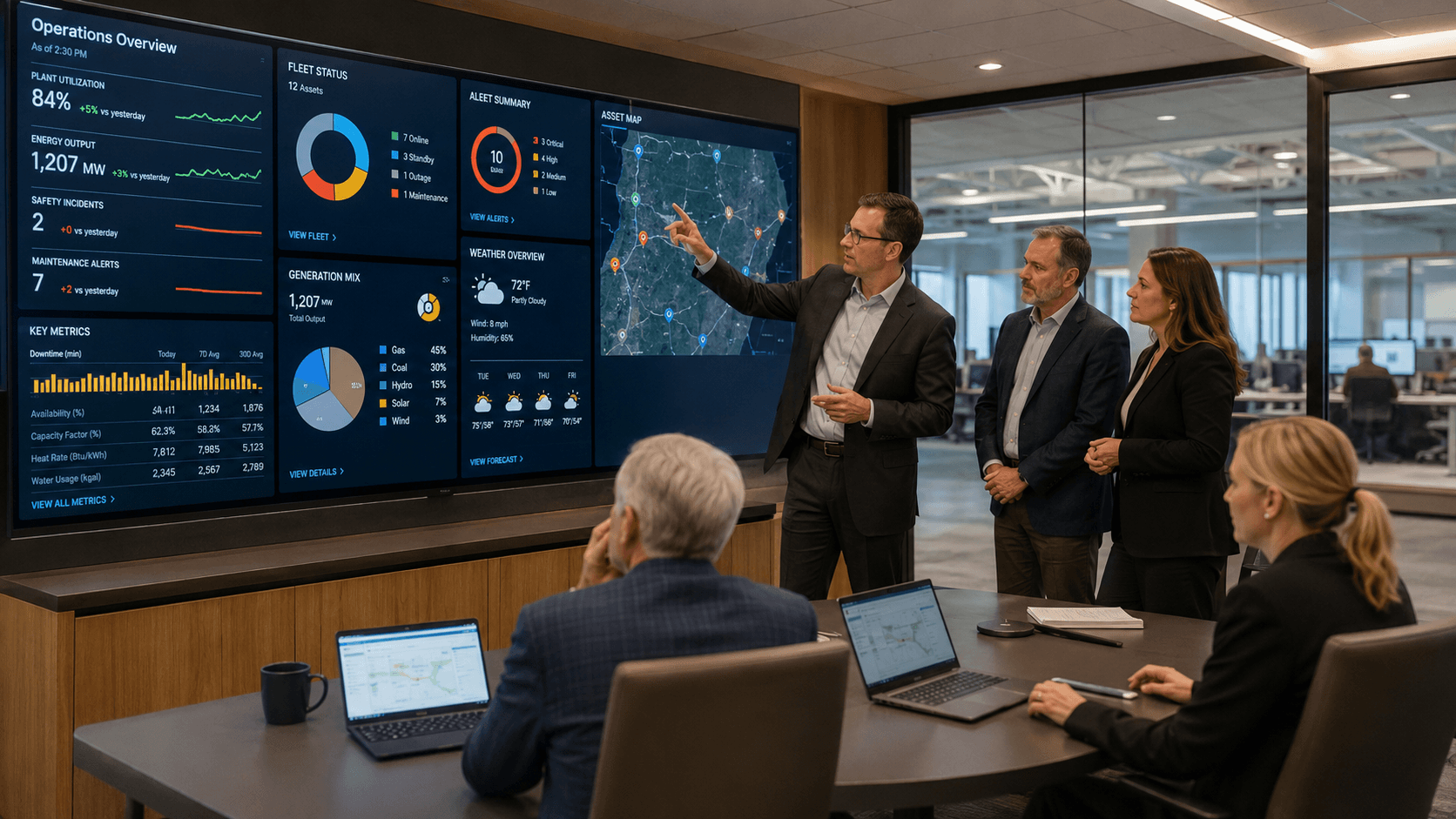
    Enterprise operations team reviewing HSEQ systems and performance visibility
    Mature HSEQ systems give leaders a clearer view of the operating conditions that protect performance and sustain enterprise value.

    For decades, HSEQ functions were viewed primarily as compliance mechanisms, necessary for regulatory alignment, operational oversight, and incident prevention, but often positioned outside the core drivers of enterprise value.

    Today, that distinction is changing.

    In increasingly complex operating environments, organizations are recognizing that business management systems, HSEQ, operational governance, and workforce performance are not peripheral business functions.

    They are foundational infrastructure within the enterprise.

    Operational performance is ultimately shaped by the quality of the systems governing execution across the organization. When those systems are mature, organizations are better equipped to operate with discipline, consistency, and resilience. When they are fragmented, enterprise performance becomes harder to sustain.

    Why HSEQ Is Moving Beyond Compliance

    HSEQ is no longer only about meeting regulatory expectations or reducing incidents.

    It is becoming part of the operating architecture that supports how an organization manages complexity, protects performance, and creates long-term value.

    When management systems are fragmented, leadership visibility weakens. When operational governance becomes inconsistent, variability increases. When workforce wellbeing deteriorates, execution quality declines. When assurance systems lack maturity, risk exposure expands.

    Over time, these conditions create instability that directly impacts investor confidence, operational continuity, stakeholder trust, and enterprise value.

    How Mature HSEQ Systems Create Enterprise Value

    Leading organizations are moving beyond compliance-driven models toward integrated enterprise performance systems.

    They understand that mature HSEQ and governance frameworks can strengthen:

    • Leadership accountability
    • ESG credibility
    • Organizational resilience
    • Execution discipline
    • Stakeholder confidence
    • Operational consistency
    • Workforce reliability
    • Risk predictability

    Most importantly, they strengthen organizational stability.

    In volatile, high-risk environments, stability is becoming a premium capability. The organizations most capable of sustaining performance over time are not always the ones moving fastest. They are often the ones operating with stronger systems, clearer accountability, and greater execution discipline.

    Leaders reviewing enterprise performance systems and operational governance indicators
    Enterprise Value

    HSEQ is no longer just protecting operations. It is protecting value.

    For boards, investors, and operators, mature HSEQ systems help show whether performance is supported by the structure, reliability, and oversight needed to hold up under pressure.

    The Link Between HSEQ, Governance, and Enterprise Performance

    This is where modern HSEQ systems create enterprise value.

    Increasingly, investors, boards, regulators, insurers, and stakeholders are evaluating organizations not only by financial performance, but by the maturity of the systems sustaining that performance under pressure.

    Enterprise value is not strengthened solely through incident reduction or compliance management. It is strengthened through the operational architecture supporting the organization itself.

    Organizations rarely fail from strategy alone. More often, they fail when operational complexity exceeds governance capability.

    This evolution is reshaping how sophisticated enterprises approach risk, assurance, operational performance, HSEQ and ESG integration, and workforce wellbeing across the investment lifecycle.

    HSEQ as Infrastructure for Sustainable Value Creation

    The future of enterprise performance will belong to organizations capable of integrating governance, operational discipline, HSEQ, ESG, and workforce resilience into cohesive systems that create sustainable value at scale.

    In modern enterprise environments, HSEQ is no longer simply operational oversight, a support service, a dashboard, or a regulatory compliance checkbox.

    It is value infrastructure.

    This is the perspective behind Ventari Global: helping organizations bring greater structure, accountability, and confidence to complex operating environments.

    The Ventari Summit™ Framework was developed to support that shift, giving leaders a clearer way to assess maturity, reduce fragmentation, and strengthen how performance is sustained over time.

    How Is HSEQ Viewed Within Your Organization?

    Is it still seen primarily as a regulatory requirement, or is it being used to strengthen performance, stability, and long-term enterprise value?

    Ventari Global helps organizations assess where maturity is strong, where fragmentation remains, and where stronger operating systems are required.

    Modern HSEQ systems do not just support compliance. They support the ability to sustain value with discipline, confidence, and resilience.

    Reframe HSEQ as Enterprise Value Infrastructure

    Build stronger systems for disciplined execution, resilient performance, and long-term enterprise value.

    View Our Services
  • The Evolution of HSEQ: From Compliance to Enterprise Capability

    The Evolution of HSEQ: From Compliance to Enterprise Capability

    The Evolution of HSEQ: From Compliance to Enterprise Capability

    HSEQ is evolving from a compliance function into a strategic enterprise capability, shaping governance maturity, operational resilience, risk visibility, and long-term performance.

    Executive view of complex operations and enterprise performance systems
    Mature HSEQ systems provide the operational architecture behind consistency, control, accountability, and resilience.

    For decades, HSEQ functions were largely viewed through the lens of compliance. They were essential for regulatory alignment, incident prevention, and operational oversight, but often positioned outside the core drivers of enterprise performance.

    That model is rapidly becoming obsolete.

    As organizations operate in increasingly complex, high-consequence environments, HSEQ is evolving into something far more strategic: an enterprise capability that shapes how performance is governed, protected, and sustained.

    The shift is being driven by a fundamental reality of modern business. Operational performance, governance maturity, workforce resilience, and enterprise value are now deeply interconnected.

    This is the environment Ventari Global was built to support.

    Why HSEQ Is Becoming a Strategic Business Capability

    Organizations no longer fail solely because of market conditions or flawed strategy. Increasingly, they fail because operational complexity outpaces governance capability.

    Fragmented systems, inconsistent controls, weak assurance mechanisms, cultural drift, and poor visibility across operations create conditions where execution deteriorates long before financial impacts become visible.

    This is where modern and mature HSEQ systems have become strategically significant.

    When integrated effectively, HSEQ provides the operational architecture that enables consistency, control, accountability, and resilience across the enterprise. It becomes a mechanism for stabilizing performance in environments where variability, scale, and operational risk are constantly increasing.

    Organizations do not fail from complexity alone. They fail when complexity outpaces governance capability.

    From Disconnected Functions to Integrated Performance Systems

    The most mature organizations no longer separate safety, operational governance, risk management, ESG, workforce capability, and assurance into disconnected functions.

    They integrate them into unified performance systems designed to improve decision quality, execution discipline, and enterprise visibility.

    This evolution represents a broader transition from reactive compliance management toward institutional-grade operational control.

    The implications for leadership and executive teams are substantial.

    Leaders reviewing enterprise governance and operational performance
    Enterprise Capability

    HSEQ maturity shows how well an organization is built to perform.

    For boards and executive teams, mature systems can reveal whether the organization has the structure, accountability, and operating discipline required to sustain performance as complexity increases.

    Why HSEQ Maturity Matters to Boards, Investors, and Executive Teams

    Investors, regulators, insurers, and stakeholders are increasingly assessing organizations not only on financial outcomes, but on the maturity of the systems supporting operational reliability and sustainable execution.

    HSEQ maturity becomes an indicator of organizational capability, operational continuity, risk predictability, and leadership accountability.

    HSEQ management systems create organizational stability, an increasingly valuable strategic asset in volatile operating environments.

    The organizations that outperform over the long term are not necessarily those moving fastest. They are often the ones operating with the highest levels of control, alignment, and disciplined execution.

    HSEQ as a Core Enterprise Capability

    This is why HSEQ can no longer be viewed as a support function. It is becoming a core enterprise capability.

    The future of enterprise performance will belong to organizations capable of integrating governance, risk, operational execution, workforce performance, and assurance into cohesive systems that create resilience at scale.

    In increasingly complex environments, control is no longer administrative.

    It is strategic.

    For boards and executive teams, the question is no longer whether HSEQ matters. The question is whether the organization has enough visibility, discipline, and control to perform under pressure.

    Lead the Evolution of HSEQ

    As HSEQ becomes a stronger indicator of organizational capability, Ventari Global helps leaders understand where their systems stand today and what needs to mature next.

    Explore Ventari Summit™