
Rethinking Safety KPIs: pSIF vs. SIFp on Construction Projects
Why serious injury and fatality potential can reveal critical risk that traditional safety metrics may miss.
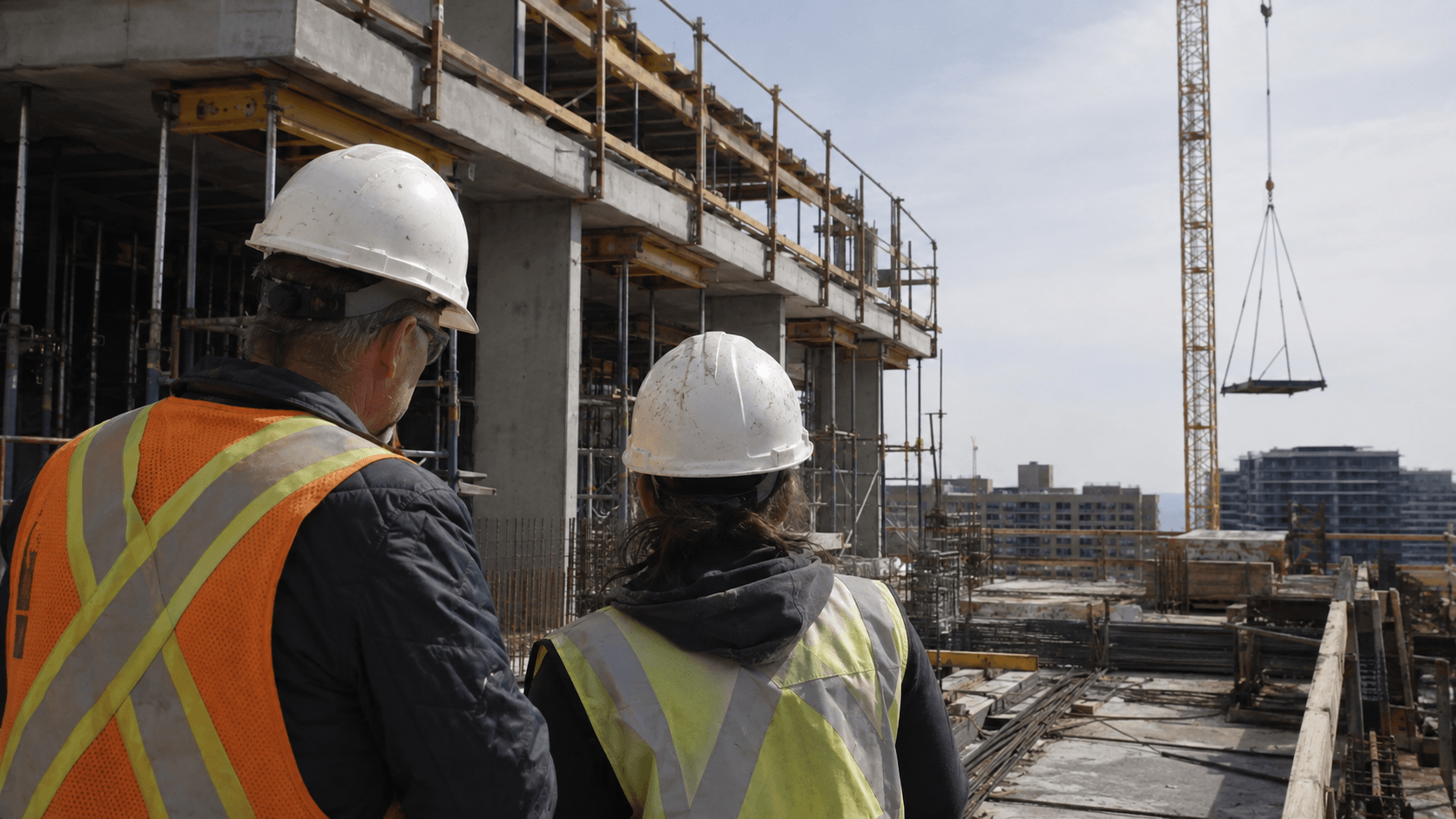
The construction industry still judges safety performance through lagging indicators like TRIR and LTIFR. Those metrics matter, but they tell us what happened – not what almost happened. On construction projects with cranes, mobile equipment, excavations, and work at height, that blind spot can be the difference between a near miss and a fatality.
The goal should be to prevent life-altering harm. Our metrics need to focus on failed controls, serious energy, and credible worst cases. That’s where pSIF and SIFp come in.
What Are pSIF and SIFp?
-
SIF (Serious Injury and Fatality)
An event resulting in a fatality or a life-altering injury, such as amputation, paralysis, loss of an eye, or severe brain injury. -
pSIF – Potential Serious Injury or Fatality
A near miss, exposure, or incident that did not result in a SIF, but had a credible likelihood to do so under slightly different circumstances. -
SIFp – Serious Injury and Fatality Potential
Another notation for the same concept: an event where the credible worst case meets the SIF threshold, even though the actual outcome was minor.
In practice, pSIF and SIFp both describe high-energy events with weak or failed controls where a small change could have produced a fatality or a life-altering injury.
What does that look like on a construction project?
On construction projects, examples include:
- A tower crane hook swinging through a pedestrian area after a mis-rigged load.
- A trench collapse where workers avoid injury because they had just stepped out.
- A mobile crane operating inside the minimum approach distance to overhead power lines.
Nothing “recordable” may have occurred – but the credible worst case is a SIF.
A minor actual outcome does not necessarily mean the underlying risk was minor.
Why pSIF/SIFp Beat Traditional KPIs
Traditional KPIs measure frequency, not severity. TRIR can improve while serious risk remains unchanged, because many recordables come from low-energy events like strains and minor cuts.
Focusing on pSIF/SIFp offers clear advantages:
- It focuses attention on life-altering risk, not just rate management.
- It acts as a leading indicator, demonstrating where critical safeguards are weak before a serious incident occurs.
- It filters out low-severity noise and drives learning from the events that truly matter.
This broader view is also important at the enterprise level. Through Enterprise Advisory, Ventari Global works with leadership teams to connect HSEQ performance, operational risk, governance, controls, and decision-making rather than treating safety metrics as isolated numbers.
How to Implement pSIF/SIFp on Projects
Implementation is about changing how you identify and classify risk:
- Align on clear definitions and examples. Use a credible worst-case outcome (life-altering injury or fatality) as the test and build examples around high-risk construction tasks: crane lifts, excavation, steel erection, temporary works, and energized work.
- Integrate into existing reporting. Add a “SIF potential?” step to incident, near miss, and hazard forms, rather than creating a new process. Update investigation templates to require a SIF potential assessment and a brief credible worst-case description.
- Train supervisors and investigators. Use real project scenarios to calibrate what is and isn’t pSIF/SIFp. Emphasize high energy, vulnerable people, and missing or failed critical controls.
- Review and act. Create a cross-functional group to validate classifications and look for themes across projects. Require that every SIF and SIFp generates actions focused on critical controls – engineering, temporary works design, lifting plans, traffic management, isolation – and track closure and effectiveness.
Classification only creates value when it leads back to the controls capable of preventing life-altering harm.
Common Pitfalls to Avoid
Several traps can undermine pSIF/SIFp:
- Under-reporting. High-potential events are minimized (“no one got hurt”) or coded as generic near misses, hiding your true risk profile.
- Treating SIFp as just another score. Chasing lower numbers without focusing on control quality turns SIFp into a lagging KPI.
- Paperwork over controls. Responding with more forms and briefings but leaving physical and organizational controls unchanged misses the point.
- Inconsistent criteria. Different projects or contractors apply different thresholds; without calibration, benchmarking is misleading.
- Fear of blame. If reporting SIFp feels risky, crews will “fix and forget” rather than speak up.
Independent Audit & Assurance can help test whether classifications, critical controls, corrective actions, and assurance processes are being applied consistently across projects and whether the evidence supports what is being reported.

The outcome may be minor. The exposure may not be.
Serious-risk reporting should make failed controls, high-energy exposure, and credible worst-case outcomes visible before the same conditions produce a life-altering injury or fatality.
Best Practices for Reporting and Using SIFp Data
To make pSIF/SIFp a genuine prevention tool:
- Make reporting easy on projects. Use simple mobile or paper channels and explicitly invite “nothing happened but it could have been bad” reports around high-risk tasks.
- Capture meaningful data. Record activity type, energy source, control failures, and credible worst case, with standardized fields for trend analysis.
- Put SIFp beside SIFs and controls on dashboards. Show SIFs, SIFp events, critical control verification, and action effectiveness together, not in isolation.
- Use periodic learning reviews. Look across SIFp events for recurring issues (e.g., crane planning, traffic management, temporary works) and adjust standards and planning accordingly.
- Close the loop in the field. Show crews what changed because they reported SIFp – new exclusion zones, redesigned access, improved shoring – and link SIFp data to leadership project walks and control verification.
Ventari Global’s approach starts with operating reality: how risk, controls, accountability, assurance, and performance connect in practice. SIF potential becomes useful when that information leads to better decisions and stronger controls in the field.
When workers see that the organization cares about what could have happened and responds constructively, they are far more willing to surface serious risks and weak controls.
The conversation shifts from “How do we lower our TRIR?” to “How do we reduce credible opportunities for a life-altering event on our projects?” – and that is where real prevention begins.
The objective is not simply to lower the number of incidents. It is to reduce the opportunities for serious harm.
Are Your Safety Metrics Showing the Risk That Matters?
Ventari Global helps organizations improve HSEQ systems, critical controls, and assurance so emerging risks can be identified earlier and addressed with confidence.