
Wildfire Preparedness: Leadership Under Pressure
A practical leadership framework for protecting workers, managing wildfire smoke, maintaining operational continuity, and strengthening crisis readiness.
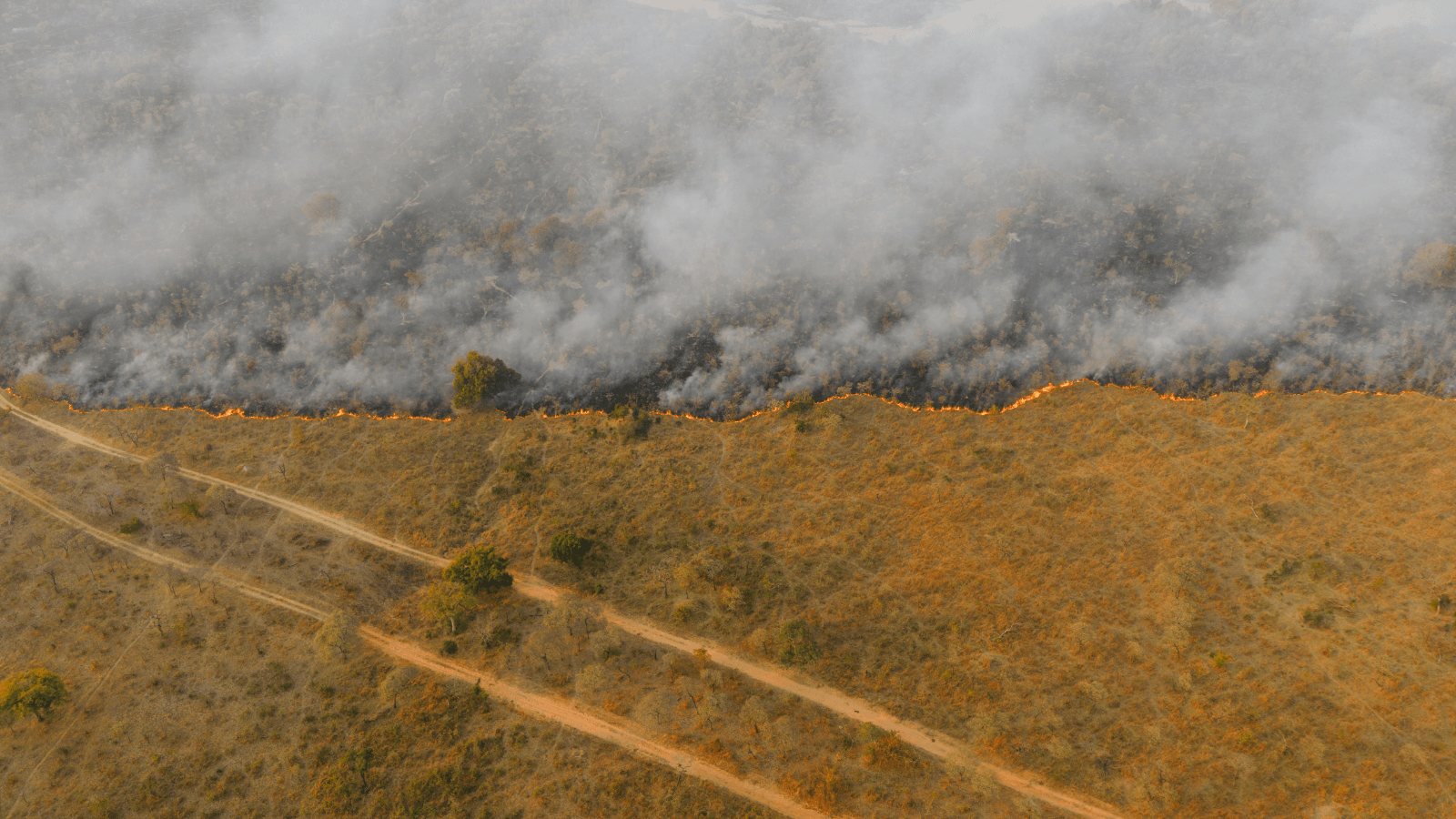
People’s safety must always come first.
Yet protecting people during a wildfire event requires more than issuing an air quality alert. Leaders need to recognize changing conditions, activate effective controls, explain responsibilities, and make decisions before exposure reaches an unsafe level.
Wildfire smoke can travel long distances and affect facilities far beyond the immediate fire zone. In addition, wind, weather, fire activity, and local smoke levels can change quickly. The Canadian Centre for Occupational Health and Safety advises employers to assess wildfire smoke as a workplace hazard and use suitable controls to reduce exposure. [1]
For boards and executive teams, this is not simply an environmental or occupational health issue. Instead, it tests workforce protection, operational control, crisis readiness, and business continuity.
Can the organization understand what is changing, determine what it means for its people and operations, and respond before teams must improvise?
Wildfire Smoke Is an Enterprise Risk
Smoke can affect outdoor workers, offices, workshops, vehicles, accommodation facilities, control rooms, and other enclosed spaces.
At the same time, a wildfire event may disrupt roads, rail access, utilities, communications, emergency services, worker accommodations, suppliers, and key transportation routes.
As a result, wildfire preparedness should connect occupational health, HSEQ risk management, facilities, operational planning, contractor management, emergency response, business continuity, and crisis leadership.
Ventari Global’s approach to enterprise control connects leadership expectations with operating reality. Wildfire preparedness requires the same discipline. Monitoring, controls, accountability, escalation, and continuity decisions must work as one system.
1. Monitor Conditions Before Exposure Escalates
Teams should not wait until workers can see or smell smoke before they assess the risk.
Use more than one source of information
In Canada, the Air Quality Health Index, or AQHI, uses a scale from 1 to 10+ to explain the health risks linked to air quality. [2] Therefore, it gives organizations a useful starting point for tracking changing conditions.
However, a regional reading may not reflect conditions at a remote project, mine, rail corridor, port, industrial site, or other work location. Local geography, weather, work activity, and smoke movement can create different exposure levels across the same region.
For this reason, leaders should decide whether they also need local observations, government warnings, wildfire forecasts, weather information, or site-level PM₂.₅ monitoring.
Turn monitoring into action
A practical monitoring process should define:
- The information sources the organization will use.
- The person or role responsible for monitoring them.
- The frequency of each review.
- The locations and work groups that require coverage.
- The escalation route when conditions change.
- The decisions that each trigger should support.
In addition, review frequency should reflect how quickly conditions can change. WorkSafeBC advises employers to review wildfire smoke risks before work begins and periodically during the day, then adjust plans as conditions change. [5]
Monitoring creates value only when it changes the decision.
2. Set Response Thresholds Before Conditions Deteriorate
A general direction to “monitor air quality” does not tell a supervisor what to do when smoke levels rise.
Therefore, organizations need clear action levels that connect air quality information with operating decisions. Each organization should base those levels on local laws, public health guidance, work duration, physical effort, indoor and outdoor conditions, and its own risk assessment.
Use the AQHI as a starting point
The AQHI is a public health tool, not an occupational exposure limit or a universal workplace standard. Its official health recommendations distinguish between the general population and people at risk. [2] Organizations should use the AQHI as one input alongside applicable laws, public health direction, worker symptoms, work intensity and duration, local conditions, and their own risk assessment.
At AQHI 1 to 3, low risk: Everyone can continue their usual outdoor activities.
At AQHI 4 to 6, moderate risk: The general population can continue usual outdoor activities unless symptoms occur. People at risk should consider reducing or rescheduling strenuous outdoor activities if they experience symptoms.
At AQHI 7 to 10, high risk: The general population should consider reducing or rescheduling strenuous outdoor activities if symptoms occur. People at risk should reduce or reschedule strenuous outdoor activities.
At AQHI 10+, very high risk: The general population should reduce or reschedule strenuous outdoor activities, especially if symptoms occur. People at risk should avoid strenuous outdoor activities.
These are public health recommendations. They do not determine whether a workplace, task, vehicle, or facility is safe. Organizations should assess the work, confirm whether existing controls remain effective, determine whether indoor spaces remain suitable for occupancy, and decide whether activities should continue, change, move, or stop.
Add site-specific operational triggers
AQHI levels should not act as the organization’s only triggers. Environment and Climate Change Canada notes that air pollution changes over time and distance, so readings can vary within the same community.
Additional exposure, control, emergency, and continuity triggers may include:
- Elevated site-level PM₂.₅ readings.
- Worker symptoms or health concerns.
- Poor visibility.
- HVAC or filtration failure.
- Road closures or evacuation alerts or orders.
- Loss of power, communications, or safe transportation.
- Wildfire smoke occurring alongside extreme heat.
- An inability to maintain cleaner-air areas.
Ultimately, response thresholds should remove doubt when operating pressure increases. They should not simply add more numbers to a procedure.
3. Protect Indoor and Outdoor Workers
Employers should apply the hierarchy of controls when managing wildfire smoke exposure. Respiratory protection should not become the first response when teams can move, delay, reduce, or stop the work.
Protecting outdoor workers
Outdoor workers may face greater exposure because their work often involves physical effort, long periods outside, travel between locations, and limited access to cleaner indoor spaces.
Depending on the risk, employers may consider measures such as:
- Reschedule non-essential work.
- Move tasks to a location with better air quality.
- Reduce physical effort or exposure time.
- Increase breaks in a cleaner-air environment.
- Use enclosed and filtered vehicles or facilities.
- Reassign work where practical.
- Increase supervisor and worker check-ins.
- Stop work when controls cannot reduce exposure enough.
Where respiratory protection is required, employers must follow the applicable requirements for equipment selection, fit testing, use, care, maintenance, and respiratory protection program administration. WorkSafeBC’s wildfire smoke guidance notes that respirators may be appropriate depending on smoke levels and the work being performed. [6]
In addition, leaders must consider how smoke interacts with heat, fatigue, physical effort, and personal protective equipment. A control for one hazard should not create another unmanaged risk.
Protecting indoor workers
Indoor work does not automatically protect people from wildfire smoke.
Smoke can enter through outdoor-air intakes, open doors and windows, loading areas, gaps in the building, and poorly maintained ventilation systems.
Before wildfire season, facilities and operational teams should understand:
- The ventilation systems that serve each occupied area.
- Whether those systems can safely use recirculation.
- The highest-efficiency filters each system can support.
- The availability of replacement filters.
- The locations that could serve as cleaner-air rooms.
- Whether portable HEPA air cleaners suit the space.
- Who can change ventilation settings.
- How the facility will respond to a power or HVAC failure.
Health Canada’s cleaner-air guidance recommends MERV 13 or higher filtration where the building system can safely support it. Portable HEPA air cleaners may also help reduce fine particles in suitable spaces. [3]
Meanwhile, qualified personnel should actively manage ventilation. During periods of heavy outdoor smoke, recirculation or a temporary reduction in outdoor-air intake may reduce smoke intrusion, but any adjustment should account for the building design, occupancy, indoor contaminants, and the capabilities of the HVAC system.
Once outdoor air improves, Health Canada’s office-building guidance supports restoring appropriate outdoor-air ventilation while continuing to manage indoor air quality. [4]
Closing doors does not by itself confirm that a building remains suitable for occupancy. The organization should verify that ventilation, filtration, indoor conditions, and other controls continue to protect occupants.

Know when to act.
Monitoring, decision thresholds, authority, and continuity controls must work together before wildfire conditions worsen.
4. Clarify Authority and Communication
Wildfire conditions can change faster than an organization’s normal approval process.
When responsibilities remain unclear, supervisors may wait for direction, sites may use different controls, and workers may receive mixed messages.
Assign decision rights in advance
Leadership teams should establish who will:
- Monitor external and site conditions.
- Assess worker exposure.
- Manage ventilation and filtration.
- Change, move, or stop work.
- Activate emergency arrangements.
- Communicate with employees and contractors.
- Work with public authorities.
- Record decisions and supporting evidence.
Frontline leaders also need enough authority to respond when local conditions differ from regional forecasts. Otherwise, a slow approval chain may delay action while visibility, access, fire behaviour, or evacuation conditions change.
Explain what has changed
Effective updates should explain what changed, which locations or activities face an impact, which controls now apply, who owns each action, and when the next decision will occur.
In addition, workers need a clear way to report worsening conditions, symptoms, or concerns. This feedback can help leaders spot local problems that regional data may miss.
5. Maintain Operational Continuity Without Transferring Risk
Business continuity does not mean continuing every activity under every condition.
Instead, it protects essential capability while leaders decide what can continue, what must change, and what should stop.
Decide what must continue
Operational planning should identify:
- Activities that protect life safety or asset stability.
- Work that teams can delay, move, or complete remotely.
- Minimum safe staffing levels.
- Critical contractors, suppliers, and transportation routes.
- Facilities that can provide cleaner air.
- Conditions that require a controlled shutdown.
- The evidence and controls needed for a safe restart.
This approach helps leaders protect essential work without treating every task as equally urgent.
Plan for wider disruption
A wildfire event may create problems beyond air quality. For example, power, communications, fuel, water, roads, rail access, worker accommodations, emergency services, and supply chains may all come under pressure.
Therefore, continuity plans should test these links together rather than treating each disruption as a separate event.
A continuity plan that protects production but does not protect the workforce is not resilience. It is transferred risk.
Through Enterprise Advisory , Ventari Global helps boards and executive teams connect operational risk, crisis response, governance, and return-to-performance planning.
6. Integrate Air Quality Into Crisis Management
Emergency and crisis plans should address wildfire smoke even when an organization does not operate in a forested area.
A strong plan distinguishes between four different situations.
Smoke without a direct fire threat
In this case, the main concerns may include worker exposure, indoor air quality, visibility, travel, and continuity. As a result, teams may need to change work, improve filtration, limit outdoor activity, or move people to cleaner spaces.
A nearby or advancing fire
When a fire moves closer, leaders may also need to address site access, shutdown, asset protection, transportation, emergency resources, sheltering, and evacuation readiness.
Therefore, the organization should know which conditions trigger a wider emergency response rather than an air quality response alone.
An evacuation alert
Where local authorities use this term, an evacuation alert means people should be ready to leave on short notice. The organization should follow the applicable authority’s instructions, account for workers, prepare transportation and communications, and be ready to suspend work or evacuate.
An evacuation order
An evacuation order means people in the affected area are at risk and must leave immediately. The organization should follow public authority instructions, account for workers, support safe movement, and communicate with affected employees and contractors. Government of British Columbia evacuation guidance distinguishes clearly between alerts and orders. [7]
Crisis arrangements should also define:
- Activation and escalation triggers.
- Incident command and executive oversight.
- Decision authority.
- Employee and contractor accountability.
- Emergency notification methods.
- Evacuation and shelter arrangements.
- Business continuity coordination.
- Stakeholder and regulatory communication.
- Recovery and restart requirements.
The Ventari Summit™ Framework connects crisis preparedness, response, stabilization, assurance, and return to performance across one enterprise system.
That connection matters. The crisis plan, HSEQ system, continuity plan, facility controls, and executive reporting process should support the same decisions during the same event.
7. Give Executives a Decision-Ready View
Executives do not need a stream of weather screenshots.
Instead, they need a clear view of exposure, control, operational impact, and the decisions that require leadership attention.
Report what leaders need to decide
During an event, executive reporting should show:
- The sites and work groups facing exposure.
- Current conditions and the expected outlook.
- The controls teams have activated.
- Any controls that have weakened or failed.
- The work that leaders changed, moved, or stopped.
- Operational and continuity impacts.
- Evacuation, access, contractor, or supply-chain concerns.
- The decisions leaders have already made.
- The next trigger or decision point.
- The resources or executive support the response requires.
Sending an air quality notice does not demonstrate control. Therefore, leaders need evidence that safeguards remain available, effective, and able to support safe operations as conditions change.
Ventari Global examines this distinction further in Critical Controls: Evidence Before Assurance .
8. Review the Response After the Event
The organization’s responsibilities do not end when the smoke clears.
Restore safe operating conditions
Once outdoor conditions improve, facilities teams may need to bring in fresh air, replace filters, clean settled particles, and confirm that indoor conditions support normal use.
In addition, leaders should confirm that roads, transportation, worker accommodations, communications, and emergency support have returned to a safe and stable condition.
Test how well the response worked
Leaders should then complete a structured review and ask:
- Did monitoring identify the change early enough?
- Did supervisors understand the response levels?
- Did people know who held decision authority?
- Did teams activate controls at the right time?
- Did the organization protect indoor and outdoor workers?
- Did contractors follow the same requirements?
- Did messages reach every affected team?
- Which continuity arrangements worked?
- Where did equipment, resources, or authority fall short?
- Did evidence support the restart decision?
The review should produce clear actions, accountable owners, due dates, and checks that confirm completion.
However, leaders should not conclude that the system worked simply because no serious incident occurred. The absence of harm does not prove that the controls worked as intended.
Where confidence remains incomplete, an independent Audit & Assurance review can test the available evidence and identify what the organization must strengthen before the next event.
Wildfire Readiness Is Proven Before the Smoke Arrives
The existence of a plan does not prove wildfire preparedness.
Instead, real readiness depends on whether the organization can:
- Detect changing conditions.
- Protect indoor and outdoor workers.
- Activate controls without delay.
- Communicate authority clearly.
- Maintain essential capability safely.
- Escalate decisions when local controls no longer provide enough protection.
- Learn from the response and strengthen the system.
For CEOs and boards, the question is not simply whether HSEQ monitors air quality.
Ultimately, leadership must decide whether it can rely on the organization’s systems when conditions change quickly and the consequences affect people, continuity, reputation, and enterprise value.
That is the real test of preparedness.
References
- Canadian Centre for Occupational Health and Safety, Wildland Fires and Smoke. Accessed July 31, 2026.
- Environment and Climate Change Canada, About the Air Quality Health Index. Accessed July 31, 2026.
- Health Canada, Guidance for Cleaner Air Spaces During Wildfire Smoke Events. Accessed July 31, 2026.
- Health Canada, Guidance on Improving Indoor Air Quality in Office Buildings. Accessed July 31, 2026.
- WorkSafeBC, Protecting Workers From Wildfire Smoke and Heat Stress. Accessed July 31, 2026.
- WorkSafeBC, Wildfire Smoke: Frequently Asked Questions. Accessed July 31, 2026.
- Government of British Columbia, Emergency Evacuee Guidance for the Public. Accessed July 31, 2026.
Disclaimer: This article provides general operational guidance. Organizations should follow the health and safety laws, emergency requirements, public health direction, and technical standards that apply to each location and operating environment.
Strengthen Wildfire Readiness Before Conditions Escalate
Ventari Global helps boards and operational leaders clarify decision rights, strengthen crisis readiness, and maintain control as wildfire conditions change.