
HSEQ Should Report Like Every Other Business Function
HSEQ reporting should move beyond “the L” and show leaders where exposure is increasing, controls are weakening, resilience is improving, and the organization is protecting value.
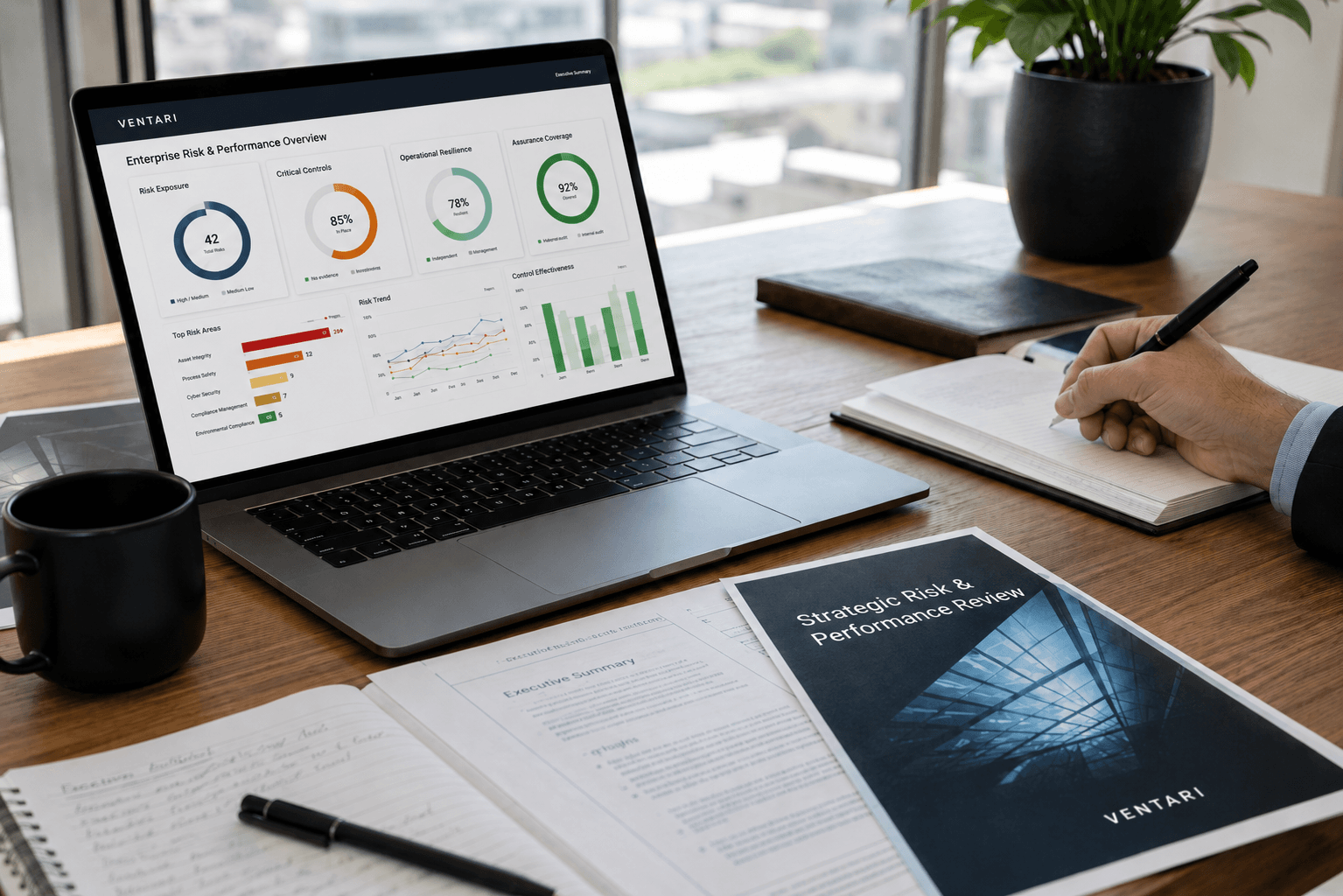
One of the biggest structural problems in modern HSEQ reporting is that HSEQ functions are still largely reporting on “the L”: losses, injuries, incidents, and failures, while every other business function reports on both risk and performance drivers.
Finance does not report only losses. Operations does not report only downtime. Sales does not report only failed bids.
Yet HSEQ reporting in many organizations remains overwhelmingly backward-looking and loss-focused. TRIF, LTIs, recordables, severity rates, lost days, regulatory breaches, corrective actions, and audit findings may be necessary, but they describe outcomes after the fact. They do not show organizational capability, control strength, exposure management, resilience, or value protection.
As a result, leaders often view HSEQ as a compliance or reporting function rather than an operational performance discipline. That is a fundamental mistake.
HSEQ is not a loss register. It is a business function.
The Problem With Reporting Only “the L”
Most HSEQ reports still read like a record of what failed. They may track incidents, claims, actions, findings, breaches, and lost time, but the pattern is the same: the report looks backward before it shows whether the organization is actually getting stronger.
It rarely shows whether critical controls are healthier, contractor performance is improving, assurance is complete, or operational pressure is beginning to erode safeguards.
That gives leadership a partial view of the business, and partial visibility leads to weak decisions.
If HSEQ only reports on losses, leaders naturally interpret HSEQ through loss. They look for recorded incidents, closed actions, and green dashboards. Those signals have value, but they do not tell leadership whether the business is actually in control.
The better questions are sharper: Where is exposure increasing? Which controls are weakening? What risk is the business creating faster than it can reduce it? Where is the business relying on habit, luck, or incomplete assurance?
That is the conversation mature organizations should expect from HSEQ.
HSEQ Should Be Held to the Same Reporting Standard
No serious executive team would accept a finance report that only listed losses.
Finance reports revenue, margin, cost, cash flow, exposure, forecast, variance, and risk. Operations reports production, reliability, downtime, capacity, constraints, quality, and delivery. Commercial teams report pipeline, conversion, revenue risk, client movement, and market opportunity.
They report what the business creates, protects, constrains, improves, and places at risk. Leadership should hold HSEQ to the same standard.
High-performing HSEQ functions should report more like a business unit operating with a full P&L mindset. What risks are being created? What risks are being reduced? Where is operational capacity constrained? Which controls are strengthening resilience? Where are we generating operational stability? What exposures threaten continuity, reputation, production, capital, or asset integrity? What investments are reducing volatility and protecting enterprise value?
That is the reporting standard HSEQ needs if leaders expect it to influence enterprise decisions.
For organizations operating in complex, regulated, capital-intensive, or high-consequence environments, HSEQ cannot sit outside the operating model. It has to be part of how leadership understands control, exposure, resilience, and performance.
This is where HSEQ becomes strategically relevant. Not because it produces a report, but because it gives leaders a clearer view of how the organization is functioning under pressure.
A Quiet Record Is Not a Safe System
Safety is not simply the absence of injuries. It is the presence of operational control.
That distinction matters because many organizations mistake quiet periods for safe systems. Because nothing serious happened, they assume the business must be performing well. A clean month can appear to confirm that controls are working. Likewise, a positive trend can suggest that the risk profile is improving.
That is not always true. The absence of loss does not prove the presence of resilience. A business can look calm on paper while exposure is building in the system.
HSEQ reporting should help leaders see the difference. It should show where production pressure, contractor behaviour, degraded maintenance, fatigue, weak supervision, or system drift are changing the risk profile before those signals become serious events.
That is the work of mature HSEQ reporting: not simply recording what went wrong, but showing whether the system is strong enough to prevent what could go wrong next.
HSEQ Should Report on Protection and Performance
The practical shift is this: HSEQ should report on both protection and performance.
Protection means understanding where the organization is exposed, which controls are vulnerable, where assurance is incomplete, and where risk is increasing. Performance means understanding how HSEQ systems contribute to operational stability, workforce capability, contractor discipline, process reliability, asset integrity, and resilience.
This changes the leadership conversation. HSEQ reporting should not simply confirm whether the dashboard stayed green. It should show whether the business is better protected than it was before.
That shift moves HSEQ out of the compliance corner and into the operating model. It connects safety, environment, quality, risk, assurance, ESG, operational performance, and business continuity.
For high-risk, regulated, capital-intensive, or complex operating environments, this is not optional. HSEQ failures do not stay inside the HSEQ function. They can affect production, continuity, reputation, regulatory confidence, workforce trust, contractor performance, insurance volatility, asset integrity, capital confidence, and board assurance.
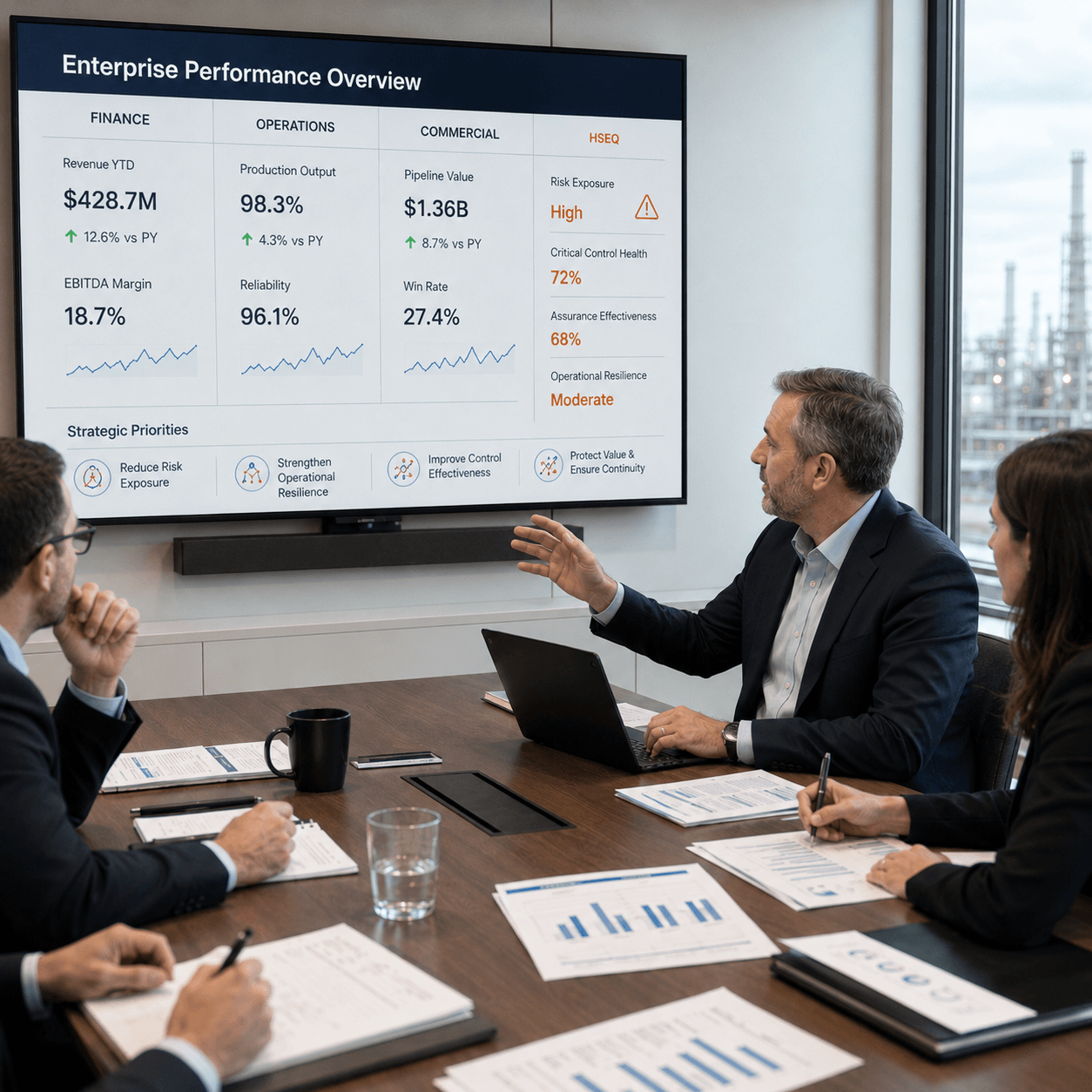
Green dashboards are not enough.
Leaders need reporting that shows whether controls are holding, pressure is building, and the organization is becoming stronger or more exposed.
HSEQ Protects Enterprise Value
When organizations only measure loss outcomes, they unintentionally frame HSEQ as a cost centre that exists to reduce negative events. Mature organizations understand that effective HSEQ systems protect value as well as prevent failure.
Strong HSEQ systems improve operational reliability, reduce disruption, stabilize production, strengthen workforce capability, reduce insurance volatility, improve contractor performance, protect asset integrity, and preserve enterprise value.
That is not “the L.” That is business performance.
A mature HSEQ function should be able to show how its work protects the business. Not vaguely. Not through generic statements about culture or compliance. Through evidence of risk reduction, control effectiveness, exposure management, assurance quality, resilience, and operational discipline.
This is the difference between a reporting function and a business function. If HSEQ can only say what went wrong, it will be treated as a department that records failure. If HSEQ can show how risk is being reduced and value is being protected, it becomes part of enterprise performance.
That is the shift boards and executive teams should be demanding. This is where the Ventari Summit™ Framework can support a more integrated view of HSEQ, ESG, assurance, enterprise risk, operational control, and performance across the organization.
Boards Should Expect HSEQ Reporting to Show the Condition of the System
Better HSEQ reporting should show the condition of the system, not just the consequences of failure.
It should include:
- Critical control health.
- Operational resilience indicators.
- Capacity pressures.
- Exposure trends.
- Assurance effectiveness.
- Process stability.
- Contractor performance.
- Asset integrity risk.
- Learning system effectiveness.
- Major risk reduction initiatives.
- Cost of unmanaged risk.
- Value protected through prevention and operational discipline.
The goal is not to make reporting more complicated. The goal is to make it more useful.
A strong HSEQ report should help leadership understand where evidence justifies confidence and where it does not. It should show what is changing, what is weakening, what teams are normalizing, what requires intervention, what needs investment, and what is creating risk faster than the organization is reducing it.
That is the kind of reporting executives can use not only to understand safety but also to run the business better.
This is the type of shift organizations should expect from HSEQ, ESG, assurance, critical risk, and operational performance advisory that is designed to connect leadership expectations with operational reality.
Why CEOs Should Care
CEOs should care because unmanaged operational risk rarely stays contained inside HSEQ.
A weak HSEQ reporting model can leave leadership with the appearance of control while serious exposure continues to build. It can make the organization look stable while operational resilience is weakening. It can allow executives to miss early signals until they become incidents, disruptions, enforcement issues, reputation problems, or capital events.
A strong HSEQ reporting model does the opposite. It helps leaders see risk earlier, act faster, allocate resources better, and intervene before weak signals become business-critical events.
That is why HSEQ belongs in the business performance conversation, not outside it.
For boards, investors, and executive teams, the issue is not whether HSEQ has produced a report. The issue is whether the report gives leadership a truthful view of exposure, control, resilience, and value protection.
That is a higher standard, and it is the standard modern organizations need.
HSEQ Needs to Show the Real Condition of Control
The next stage of HSEQ reporting should not be about producing a cleaner dashboard. It should be about showing the real condition of operational control.
Leadership should move from asking, “How many injuries did we have?” to asking, “How effectively are we controlling operational risk and protecting organizational performance?”
That is a stronger operating model. It also aligns HSEQ with how every other mature business function already reports to executive leadership and boards.
This moves HSEQ from reporting outcomes after the fact to giving leadership a current view of exposure, control strength, assurance quality, operational pressure, and the actions leaders must take to protect the business.
To see how Ventari Global helps organizations connect HSEQ, ESG, assurance, critical risk, and operational performance into one clearer view of enterprise control, request a discussion with our team.
Bring HSEQ Into the Business Performance Conversation
Stop treating HSEQ as a record of failure. Give leadership the visibility to see where control is strong, where it is weakening, and where business value is at risk.